
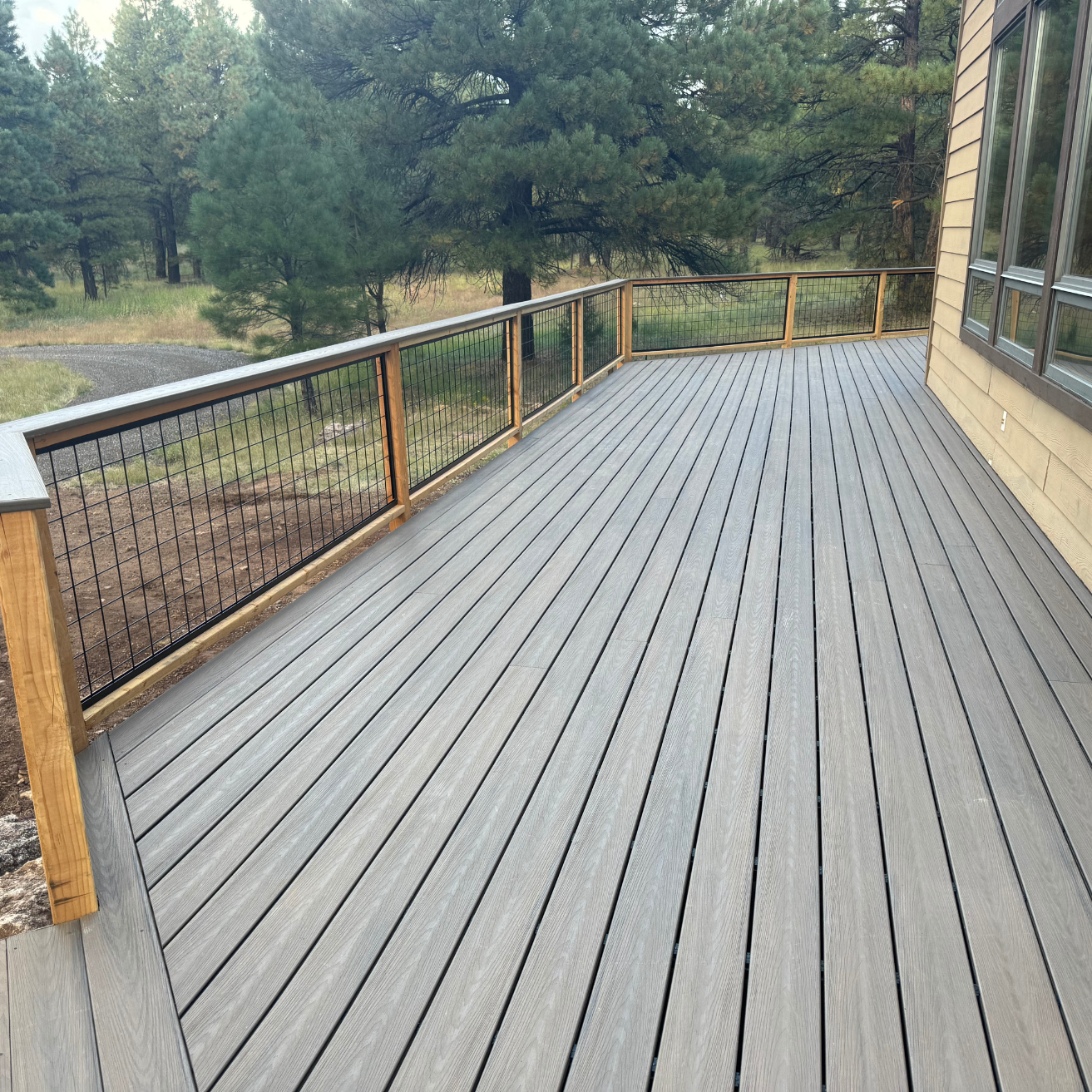
One of the biggest decisions you'll make when planning a new deck is the material. Composite and natural wood are the two most popular options, and each has its strengths. The right choice depends on your priorities—whether that's cost, appearance, maintenance, or longevity.
Let's break down the differences so you can make an informed decision for your Northern Arizona home.
Natural Wood Decking
Wood has been the go-to decking material for generations, and for good reason. It's beautiful, widely available, and generally costs less upfront than composite alternatives.
Popular Wood Options
Pressure-Treated Pine is the most affordable option. It resists rot and insects thanks to chemical treatments, but it requires regular staining and sealing to maintain its appearance. Over time, it can warp, crack, or splinter without proper care.
Cedar offers natural resistance to decay and insects without chemical treatment. It has a warm, rich tone that many homeowners love. However, it's softer than other woods and can dent or scratch more easily.
Redwood is a premium natural option with stunning color and excellent durability. It's more expensive than cedar or pine but holds up beautifully with proper maintenance.
Pros of Wood - Lower upfront cost - Natural beauty and warmth - Easy to repair individual boards - Can be stained any color
Cons of Wood - Requires annual maintenance (staining, sealing) - Can warp, crack, or splinter over time - Susceptible to rot and insect damage without treatment - Shorter lifespan (10-15 years without diligent maintenance)
Composite Decking
Composite decking is made from a blend of wood fibers and plastic polymers. Modern composites have come a long way from the early versions that looked obviously artificial.
What Makes Composite Different
Today's composite boards feature realistic wood-grain textures and come in dozens of colors. They're engineered to resist fading, staining, scratching, and mold growth. Most brands offer warranties of 25 years or more.
Pros of Composite - Virtually maintenance-free (just clean occasionally) - Won't splinter, warp, or rot - Resistant to insects and moisture - Long lifespan (25-50 years) - Consistent color and appearance
Cons of Composite - Higher upfront cost - Can get hot in direct sunlight - Difficult to repair individual boards - Some people prefer the look of real wood
Which Is Better for Northern Arizona?
Flagstaff and Prescott see significant temperature swings, snow, rain, and intense UV exposure. These conditions put any decking material to the test.
Composite handles freeze-thaw cycles exceptionally well. It won't absorb moisture the way wood does, which means less expansion, contraction, and cracking. The UV resistance also means it won't gray or fade as quickly.
Wood can absolutely work in Northern Arizona, but it demands more attention. You'll need to apply sealant before winter, keep snow cleared to prevent moisture damage, and inspect for cracks each spring.
The Bottom Line
If you want low maintenance and long-term durability, composite is the way to go. If you prefer natural aesthetics and don't mind the upkeep, quality wood like cedar or redwood is a beautiful choice.
At M3 Deck Development, we work with both materials and can help you weigh the options based on your specific property and budget. Call us at +1 (928) 607-9903 to discuss your project.
Ready to Start Your Project?
Contact M3 Deck Development for a free consultation on your deck project.
Call Now: +1 (928) 607-9903