
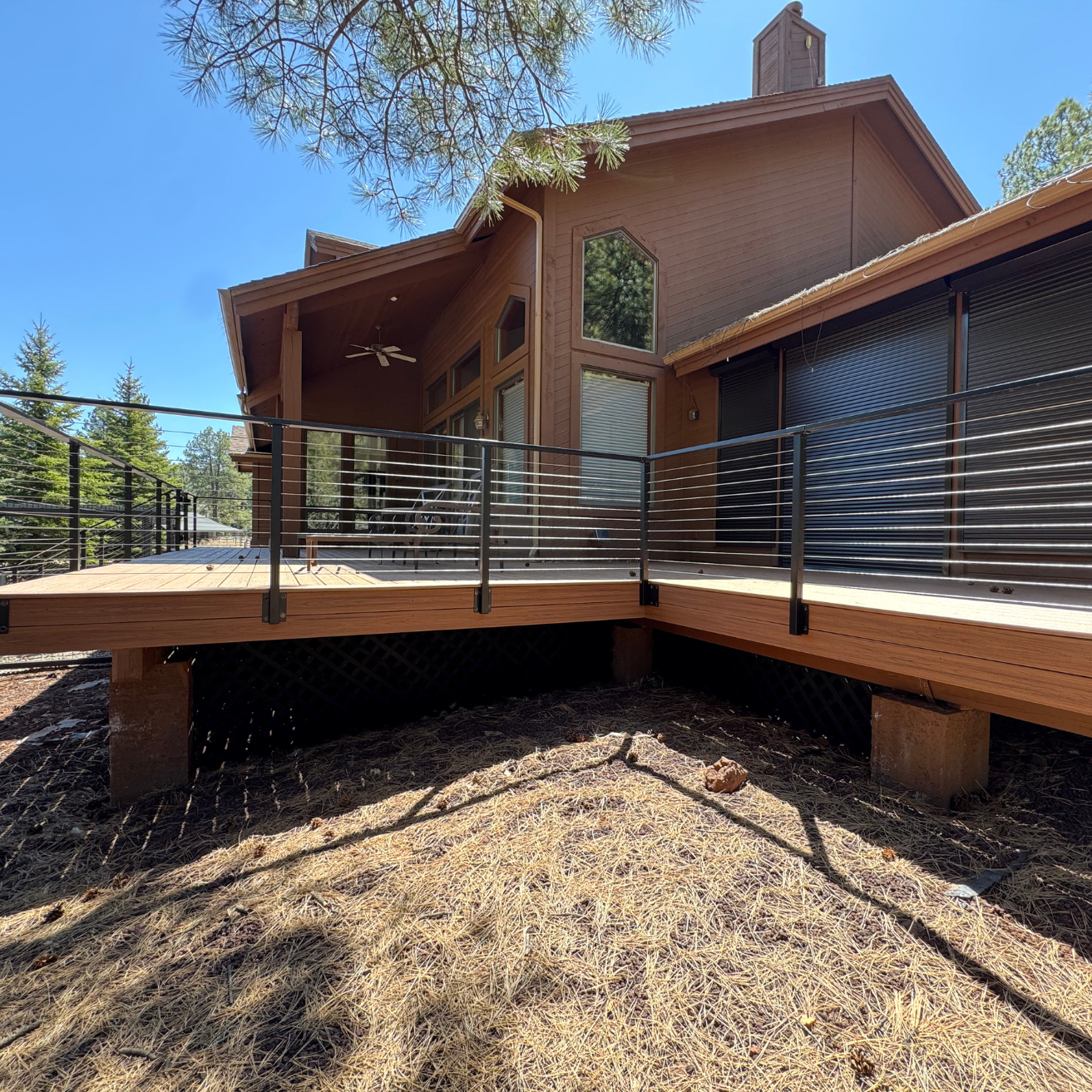
Multi-story decks are some of the most impressive outdoor structures you can add to a home. They're also some of the most complex to build. Whether you need an elevated deck to match a second-story living area or a cascading multi-level design that follows your hillside, there's a lot more involved than a simple ground-level platform.
Here's what every homeowner should know before starting a multi-story deck project.
Why Build a Multi-Story Deck?
The most common reason is simple: your home's main living area is above ground level. Many Northern Arizona homes—especially those built on slopes or with walkout basements—have their primary living space on the second floor. A ground-level deck attached to the first floor doesn't give you the outdoor access you want.
A multi-story deck solves this by bringing your outdoor living space up to where you actually spend your time. It can also add usable space below, creating covered areas for storage, shade, or additional seating.
Engineering and Structural Requirements
Multi-story decks aren't DIY projects. They require professional engineering because they carry significantly more weight and wind load than ground-level structures. Key structural considerations include:
Foundation and Footings Elevated decks need deeper, wider footings than standard decks. In Northern Arizona, where frost lines can extend 30 inches or more below grade, your footings must reach below the frost line to prevent heaving.
The size and spacing of footings depends on the deck's height, span, and expected load. An engineer will calculate these specifications based on your specific design and local soil conditions.
Post and Beam Construction The vertical posts that support an elevated deck must be properly sized for the height and load they carry. Taller posts are more susceptible to lateral forces (wind, movement) and may require cross-bracing for stability.
Beam sizing is equally critical. Undersized beams lead to bounce, sag, and eventual structural failure. Professional builders use span tables and engineering calculations to determine the correct beam dimensions for every application.
Ledger Board Attachment If your deck attaches to your home, the ledger board connection is the most critical structural element. Improper ledger attachment is the number one cause of deck collapses nationwide.
The ledger must be bolted—not nailed—to the house framing, with proper flashing to prevent water intrusion. For multi-story decks, the forces on the ledger are amplified, making professional installation essential.
Railing Requirements and Options
Building codes require railings on any deck surface 30 inches or more above grade. For multi-story decks, railings must typically be 42 inches tall (compared to 36 inches for lower decks) and capable of withstanding 200 pounds of lateral force.
Popular railing options for elevated decks include:
- - Cable railings that maintain open views
- - Glass panels for wind protection and unobstructed sightlines
- - Metal balusters for durability and a clean look
- - Wood railings for a traditional appearance
The choice affects both aesthetics and cost. Cable and glass systems tend to be more expensive but offer the best views, which is often the whole point of building an elevated deck.
Staircase Design
Getting from ground level to an elevated deck requires well-designed stairs. For multi-story decks, the staircase becomes a significant design element in itself.
Wide stairs (48 inches or more) feel more welcoming than narrow ones. Intermediate landings break up long runs and provide rest points. Proper lighting on stairs is essential for safety, especially in mountain locations where evenings come early in winter.
Consider the approach path from your yard to the stairs. A well-planned route with landscaping along the way makes the transition from ground to deck feel natural and intentional.
Permits and Inspections
Multi-story decks always require permits and multiple inspections. Expect inspections at minimum for:
- Footing holes before concrete is poured
- Framing before decking is installed
- Final inspection after completion
Some jurisdictions require additional inspections for electrical work (lighting, outlets) or special features like hot tubs. Your builder should handle all permit applications and inspection scheduling.
Cost Considerations
Multi-story decks cost more than ground-level builds due to deeper footings, taller posts, more lumber, additional hardware, and the engineering required to ensure safety. The staircase alone can represent a significant portion of the budget.
As a rough guideline, expect a multi-story deck to cost 1.5 to 2.5 times more per square foot than a comparable ground-level deck. The exact cost depends on height, materials, railings, and site conditions.
Trust the Experts
Multi-story deck construction is not the place to cut corners. The structural demands, code requirements, and safety stakes are too high for anything less than experienced, professional builders.
At M3 Deck Development, we have extensive experience designing and building multi-story decks throughout Northern Arizona. We handle everything from engineering and permitting to construction and final inspection.
Call us at +1 (928) 607-9903 to discuss your elevated deck project.
Ready to Start Your Project?
Contact M3 Deck Development for a free consultation on your deck project.
Call Now: +1 (928) 607-9903